


Most J1 visa denials come down to weak English, unconvincing ties to the home country, a case pulled into administrative processing, or content found on the applicant’s social media.
In short
- Weak English is the most common reason for denial — an officer can cut the interview short after just the first question or two.
- Rehearsed answers backfire — officers can tell them apart from natural speech by how someone reacts to an unexpected question.
- Ties to home should sound like a specific obligation — a start date for classes, patients, project meetings — not a vague statement about intending to return.
- There’s no way to learn the exact reason for a denial: an officer’s case notes are off-limits even to a FOIA request.
- If English was the reason for denial, hold off on reapplying until your level has actually improved — otherwise the money is wasted.
English Proficiency: the Leading Cause of J1 Denials
J1 category rules require the officer to confirm that an applicant’s English is strong enough to actually participate in the program. Because of that, the easiest way to run the interview is to speak to the applicant in English from the first question and judge, from that reaction alone, whether they can keep up. If they can’t, the officer may cut the interview short and deny the visa after just the first question or two: what matters at the window isn’t how important English is for the research or the project itself, but that it’s the fastest way to evaluate someone when nearly every officer is a native English speaker.
There isn’t much time to warm up. The English questions start within seconds of the interview beginning, and there’s no room to stretch the conversation out to “get comfortable.” Memorizing a set of phrases the week before doesn’t help — officers can tell rehearsed answers from natural speech, and the giveaway is how a person reacts to an unexpected question. Weak English is one of the most common reasons J1 applicants get turned down.
officers can tell rehearsed answers from natural speech, and the giveaway is how a person reacts to an unexpected question
A high TOEFL score doesn’t settle anything on its own: the officer isn’t interested in the test result, only in whether the applicant can understand a question and answer it the way people do in an ordinary conversation, rather than recite a prepared text. Officers are wary of applicants who show up at the window with memorized answers and deliver them with almost no pause after the question — it sounds unnatural, and it works against the applicant.
An accent or imperfect grammar isn’t a problem as long as the answer sounds natural and the applicant clearly understands what’s being asked. But if someone can’t form a simple sentence or doesn’t grasp the question, the interview often ends in denial after the very first exchange. That’s why working on spoken English has to be part of a J1 applicant’s strategy long before the interview itself — it’s essentially a non-negotiable requirement.
The officer isn’t grading a TOEFL score — they’re watching the live reaction to an unexpected question in English. Stumble on the first question or two, and the interview can end in denial.
Intent to Return: Why Ties to Your Home Country Matter
The second thing an officer weighs on a J1 case is the applicant’s plan. Under U.S. visa law, the consul has to be satisfied that the applicant isn’t intending to immigrate and is traveling for exactly the purpose stated at the interview — nothing else. If the plan raises even a distant suspicion that the applicant might stay in the U.S. past the visa’s validity, the application gets denied.
This check can trip up an otherwise flawless application. A real-world example: an applicant works in IT and is heading to a Silicon Valley internship — the officer may suspect the person intends to stay and work there, and deny the visa even though the applicant fully meets the program’s requirements. A similar situation comes up when the applicant is traveling to the same city where a relative already lives: the officer may conclude the applicant plans to move in with them and deny the visa, even with a strong plan and a good university behind it.
an applicant works in IT and is heading to a Silicon Valley internship — the officer may suspect the person intends to stay and work there, and deny the visa even though the applicant fully meets the program’s requirements
The only way to clear that suspicion is to give the officer a clear reason why the applicant will go home once the program ends. That’s what “ties to home country” means: a job, a house, children, or other family members who stayed behind and are waiting for the applicant to return. There has to be a real reason to come back — without one, the application looks risky no matter how solid the rest of the paperwork is.
For any U.S. nonimmigrant visa, J1 included, the applicant has to convince the officer they’ll go home once the program is over. And the answer to “why are you going to the U.S.” can’t just restate the purpose of the trip — research, a job under the Summer Work and Travel program, and so on. The answer needs to include a specific obligation back home: exactly why a return is necessary — project meetings, patients who need to be seen, or classes starting on a set date. The more concrete the plan, the better the odds of approval: a line like “classes start on this date, and I need to be back by then” carries far more weight than a vague assurance about intending to return.
If an applicant can’t name a reason to go back, that’s a strong signal to brace for denial — weak proof of ties to the home country is one of the most common reasons a J1 visa gets refused.
Instead of “I’ll go back home,” name the exact reason: the date classes start, patients waiting, project meetings. A concrete plan convinces an officer far more than a general assurance.
Changing Status After Entry: Why It Makes Officers Wary
Another reason for denial is the consul’s concern that an applicant will enter the U.S. on a J1 visa and then switch to a different status — moving to H-1B, to an F student visa, or getting a green card through marriage. Officers across every visa category run into this pattern regularly, which is exactly why they treat it with caution.
Under current U.S. visa law, the officer has to be satisfied that the applicant isn’t intending to immigrate — and in practice that’s interpreted to mean the trip has to match the exact purpose stated at the interview, and nothing beyond it. The current U.S. administration, by most accounts, is pushing to make switching status after entry noticeably harder. Whether that squares with the letter of the law is a separate question, but the administration’s position is clear: it doesn’t want applicants entering under one visa category, then moving to another and staying longer than originally planned.
For a J1 applicant, that means English skills alone aren’t enough — the applicant needs to clearly show that once the program ends, they’ll leave the U.S. and have no intention of staying on under a different immigration status.
Administrative Processing: What It Is and Why Your Visa Gets Delayed
Administrative processing is another reason a J1 visa gets denied or delayed: the case is sent for additional review, and the decision gets put off. There are two reasons this happens. The first is that the applicant’s field or activity looks sensitive — meaning it’s of interest to the U.S. government. The second is suspicion of potentially fraudulent conduct, which a separate fraud prevention unit handles.
Figuring out in advance exactly which kind of activity counts as “sensitive” is extremely hard for an applicant to do on their own. That takes a conversation with a former visa officer who understands what actually qualifies as sensitive in a given field of study or work, and what doesn’t.
The same goes for fraud suspicion: the exact list of triggers officers currently use isn’t published, and it shifts over time. A former fraud prevention unit officer can look at the specifics of a case and make an informed guess about the reason for the review, and help an applicant prepare for a possible follow-up interview — but no one can guarantee the exact cause in advance.
One important detail: how an answer is phrased during the interview can determine whether a topic gets flagged as sensitive in the first place. The same fact, described two different ways, can sound harmless or raise a flag — which is why going through a specific case with a specialized consultant is worth more than generic advice.
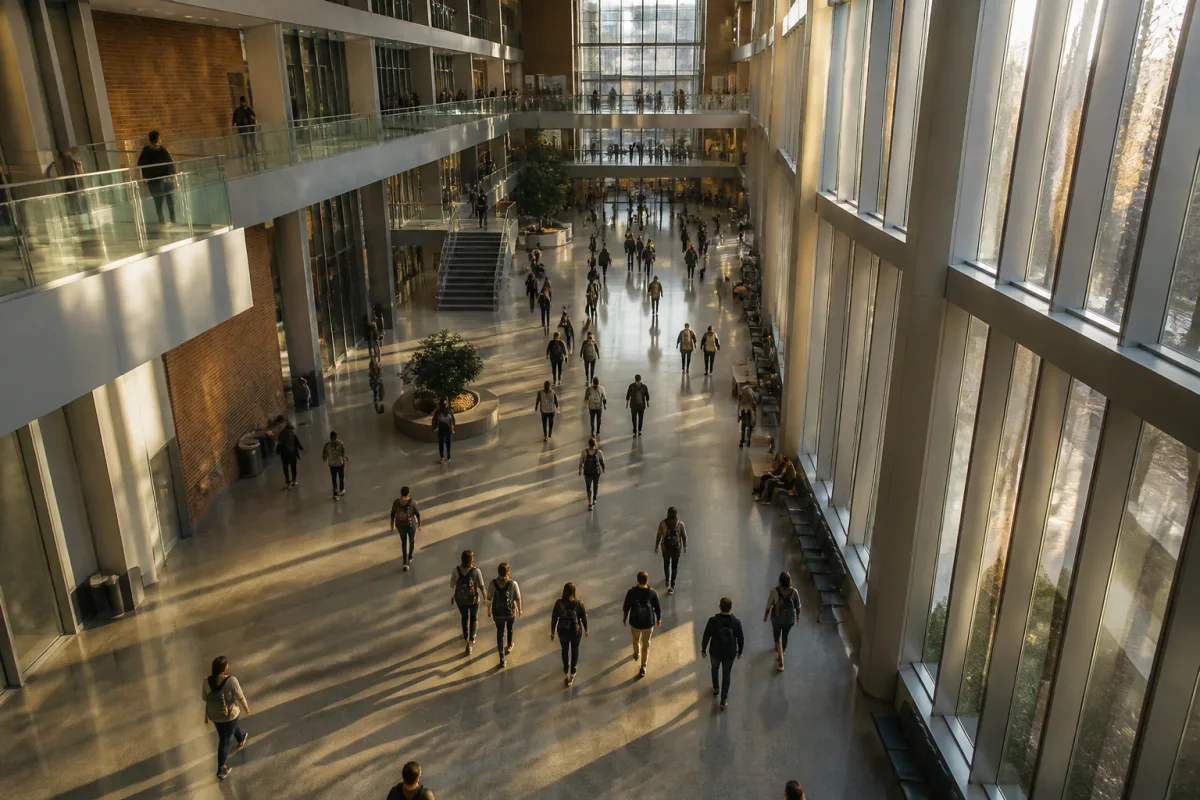
If a case gets sent for additional review — over a sensitive topic or fraud suspicion — there’s no way to learn the exact reason or timeline in advance.
Social Media Screening for J1 Visa Applicants
A fourth possible cause of denial is what’s known as social media screening. On F and J category visas, a consul may issue a temporary denial right at the end of the interview specifically so they can review the applicant’s social media accounts.
What catches an officer’s attention is open support for positions that run counter to U.S. foreign policy. If an applicant has publicly spoken out in support of countries or movements that the U.S. views unfavorably, that’s easy to spot — it just takes matching the profile against the current news cycle.
That kind of public support can lead to a denial even when the applicant meets every other J1 requirement — strong English, solid ties to the home country, a clear plan to return. In this case, formal qualification doesn’t outweigh the content of public social media posts.
Public support for positions that clash with U.S. foreign policy can sink a visa application even with flawless English and a clear return plan.
How to Find the Real Reason for a Denial, and When to Reapply
There’s no way to find out the exact reason for a denial: consular officers don’t disclose case notes — the working notes a visa officer writes up after an interview. There’s no access to them even through a Freedom of Information Act (FOIA) request or through an attorney — that route simply doesn’t work.
consular officers don’t disclose case notes
The only alternative is to reconstruct the likely reason from how the interview itself went: what the officer asked, how the applicant answered, what life circumstances might have raised a flag. That’s an educated guess, not a definite answer, but it helps with the one practical question that matters most — when to reapply.
If the officer asked a question in English during the interview and the applicant didn’t understand what was being asked, reapplying anytime soon is likely a waste of money: the outcome won’t change until the English level does. In that case, the right move is to not rush — spend time on English instead, building up conversational skills and listening comprehension so that at the next interview, the applicant can actually follow what the officer is saying instead of repeating memorized lines.
A different situation is when the reason for denial seems illogical: the officer reacted oddly to the travel plan, suspected the applicant has a relative or acquaintance in the U.S. and might stay by switching visa categories, or simply came across as biased. In cases like that, it’s reasonable to reapply fairly soon — doing so shows that the purpose of the trip genuinely matters to the applicant and that they meet the visa requirements.
A common question is what to change on the DS-160 before reapplying. If the denial was about English, it’s enough to explain to the officer that the language level has improved. If the issue was something else — say, the applicant couldn’t clearly explain the purpose of the trip, or there was some kind of miscommunication during the interview — it’s worth thinking through in advance how to address that at the next meeting.
The DS-160 should be filled out with information that’s current at the time of reapplying: if the place of study or work has changed, that needs to be reflected, not hidden — and the applicant should be ready to explain that change at the interview. Before making any significant changes to the application, it’s worth consulting someone who knows the process well, such as a former visa officer.

Tip 1: Make English Your Top Priority
The first and most important recommendation for any J1 applicant is to focus on conversational English, regardless of the program track — physician, researcher, or Work and Travel participant.
- The requirement to speak English fluently is nearly unique to the J1 category — among nonimmigrant visas, it shows up in only a couple of other categories.
- English is where J1 applicants most often stumble — it’s the single most common reason interviews fail across all the requirements in this category.
- This isn’t about a basic level good enough to understand simple questions — it’s fluency strong enough to hold a conversation with the officer without stumbling.
A detailed look at how officers evaluate language level during the interview is covered earlier in this article.
Tip 2: Understand What Builds Strong Ties to Your Home Country
The second recommendation is to understand exactly what creates strong ties to the home country, and to think through in advance how to present them at the interview.
- For any nonimmigrant visa, J1 included, the applicant must prove that once the program ends and the authorized stay in the U.S. is over, they will go back home.
- This requirement applies regardless of visa category or applicant profile — physician, researcher, or Work and Travel participant.
What exactly counts as ties to the home country is covered earlier. The point here isn’t to repeat that list but to use it: during preparation, it’s worth writing out one’s own specific ties and figuring out how to state them to the officer briefly and directly, without vague phrases.
Tips 3 and 4: Rehearsing the Interview and Your Mindset on Interview Day
The third recommendation is to rehearse the interview in advance, ideally with a former visa officer: years spent processing tens of thousands of visas give that kind of person real insight into the logic an officer uses to build questions and reach a decision. If that’s not an option, practicing with someone close works too, though the questions are harder to predict that way.
The questions themselves aren’t hard to anticipate: the officer is evaluating English level and ties to the home country, while also checking whether the applicant genuinely intends to carry out the stated activity in the U.S. and has a plan to leave once the program ends.
The fourth recommendation isn’t about the content of the answers at all — it’s about the applicant’s state of mind on the day of the meeting.
- The night before the interview, get a proper night’s sleep — being tired on interview day doesn’t help anyone.
- On the morning of the interview, it’s worth setting aside a little time for something that lifts the mood: a favorite breakfast, music, or a show.
The point isn’t that a good mood by itself leads to approval — the officer needs to see a natural, genuine reaction from the applicant. Nerves are unavoidable, but if the applicant comes across as stiff, shaky, or visibly anxious, the officer may read that as dishonesty, and getting through the interview becomes noticeably harder.
Four Steps to Prepare for a J1 Visa Interview
What an applicant should do beforehand, in order of preparation.
- Work on conversational Englishthe most common reason for J1 denial
- Map out your ties to homea specific reason to return, not vague phrases
- Rehearse the interviewideally with a former visa officer
- Get into the right mindset on interview daysleep well and start the morning on a good note
Visible stiffness or a shaky voice can read as dishonesty to an officer. Sleep well the night before and set the right tone for the morning of the interview.
Getting Ready for a J1 Visa Interview
Frequently asked questions
What if I can’t name a specific reason I’ll definitely return home after my J1 program?
That’s a serious signal to prepare for a denial. An officer won’t accept the stated purpose of the trip on its own — there needs to be a solid, concrete reason to come back: a job, housing, children, relatives, or other obligations at home. If there isn’t one, it’s worth honestly assessing the situation and thinking it through before applying.
How long does administrative processing usually take?
No exact timeframe is given — the decision simply gets pushed back for however long it takes to review the applicant’s field or activity, or a fraud suspicion. It’s worth building extra time into travel plans in case a case ends up in this kind of review.
Should I delete or lock down my social media before applying for a J1 visa?
Nothing in the J1 requirements calls for that: officers are interested in the content of public posts, particularly open support for positions that run counter to U.S. foreign policy. What to do with personal accounts is ultimately up to the applicant.

Comments
Reader experience is useful, but it is not advice: check the rules on the official site.
No account needed: click Sign in, type any name, and you are done.